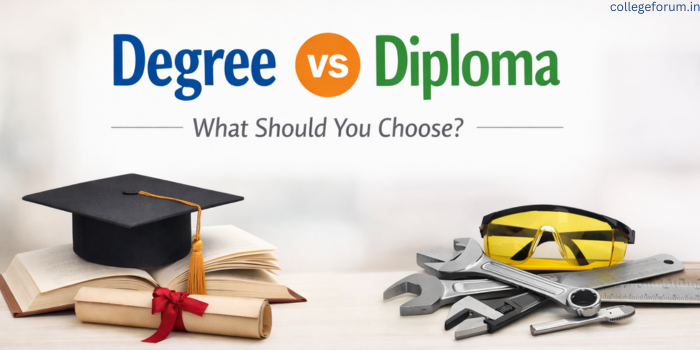
After completing class 10th or 12th, students often face confusion while choosing between a degree course and a diploma course. Many students and parents assume that a degree is always the better option, while others believe diploma courses provide faster job opportunities. In reality, both degree and diploma programs serve different academic and career purposes.
The right choice depends on a student’s career goals, financial situation, interest in practical or theoretical learning, and long-term professional plans. Understanding the difference between degree and diploma courses helps students make informed decisions instead of following common trends or peer pressure. This article explains the meaning, structure, benefits, career scope, and major differences between degree and diploma programs in simple and clear language for students.
What is a Degree Course?
A degree course is a higher education program offered by universities and recognized colleges that provides detailed academic knowledge and conceptual understanding of a specific subject. These programs are usually pursued after completing 12th grade and aim to build strong educational foundations for professional careers and higher studies.
Degree courses focus on theoretical learning along with practical exposure through lectures, assignments, projects, examinations, and research-based activities. They help students develop critical thinking, communication skills, and subject expertise required for long-term career growth.
Students completing a degree program become eligible for postgraduate education and professional career opportunities in various industries.
Key Details About Degree Courses
| Feature | Description |
|---|---|
| Course Type | Academic and university-level education |
| Offered By | Universities and recognized colleges |
| Eligibility | Completion of 12th grade (any stream depending on course) |
| Duration | Typically 3 to 5 years |
| Learning Focus | Theoretical knowledge with analytical understanding |
| Teaching Method | Lectures, assignments, projects, exams, research work |
| Career Outcome | Professional roles, higher education eligibility |
| Skill Development | Critical thinking, communication, subject expertise |
| Higher Study Options | Master’s degree, MBA, M.Tech, MSc, PhD |
Examples of Popular Degree Courses
-
Bachelor of Arts (BA)
-
Bachelor of Commerce (B.Com)
-
Bachelor of Science (B.Sc)
-
Bachelor of Business Administration (BBA)
-
Bachelor of Computer Applications (BCA)
-
Bachelor of Technology (B.Tech)
What is a Diploma Course?
A diploma course is a short-term educational program designed to provide practical knowledge and industry-oriented skills in a specific field. These courses are usually offered by polytechnic institutes, technical institutions, and training centers.
Diploma programs focus more on hands-on training and real-world applications rather than detailed theoretical study. Students can pursue diploma courses after completing 10th or 12th grade, depending on the course requirements. The main objective of diploma education is to make students job-ready in a shorter duration by developing technical expertise and practical skills required in industries. Diploma courses are suitable for students who want early employment opportunities or skill-based career paths.
Key Details About Diploma Courses
| Feature | Description |
|---|---|
| Course Type | Skill-based and practical education |
| Offered By | Polytechnic institutes and training institutions |
| Eligibility | After 10th or 12th (course dependent) |
| Duration | 6 months to 3 years |
| Learning Focus | Practical training and technical skills |
| Teaching Method | Workshops, lab training, practical projects |
| Career Outcome | Entry-level technical and skilled jobs |
| Skill Development | Hands-on experience and industry skills |
| Higher Study Options | Lateral entry into degree programs (in some fields) |
Examples of Popular Diploma Courses
-
Polytechnic Diploma in Engineering
-
Diploma in Computer Applications (DCA)
-
Diploma in Graphic Design
-
Diploma in Hotel Management
-
Diploma in Digital Marketing
-
Diploma in Nursing
Key Difference Between Degree and Diploma
The main difference between degree and diploma programs lies in their learning approach and career objectives. Degree programs provide comprehensive academic education suitable for long-term professional growth, while diploma courses focus on practical skills that help students enter the workforce quickly.
A degree course usually takes three to five years to complete, whereas diploma courses can be completed within six months to three years. Degree programs are conducted by universities, while diploma courses are mostly offered by technical institutes and training institutions.
Degree holders often qualify for higher education and competitive examinations, while diploma holders gain technical expertise and early employment opportunities.
Degree vs Diploma: Detailed Comparison Table
| Basis | Degree Course | Diploma Course |
|---|---|---|
| Education Type | Academic and theoretical | Skill-based and practical |
| Course Duration | 3 to 5 years | 6 months to 3 years |
| Eligibility | After 12th | After 10th or 12th |
| Learning Focus | Conceptual knowledge | Practical training |
| Institution Type | Universities and colleges | Polytechnic and training institutes |
| Higher Studies | Eligible for postgraduate programs | Limited but lateral entry possible |
| Cost | Generally higher | More affordable |
| Career Entry | Takes longer | Faster job entry |
| Career Growth | Strong long-term growth | Experience-based growth |
Advantages of Degree Courses
Degree programs offer structured academic learning that helps students build deep subject knowledge. This makes graduates suitable for professional roles that require analytical thinking and decision-making skills.
One major advantage of a degree is eligibility for higher education such as master’s programs and doctoral studies. Students planning careers in management, research, teaching, engineering, or government sectors often require a degree qualification.
Degree holders also experience better long-term salary growth because many organizations prefer graduates for leadership and supervisory positions. Additionally, most government job examinations require candidates to hold a bachelor’s degree. Another benefit is global recognition, as university degrees are accepted internationally for employment and further studies.
Advantages of Diploma Courses
Diploma courses are beneficial for students who want to enter the workforce quickly. Since these programs are shorter in duration, students can start earning earlier compared to degree students.
Diploma programs are generally more affordable, making them accessible to students from different financial backgrounds. The strong focus on practical training helps students develop industry-relevant skills, which increases employability.
These courses are ideal for technical fields where hands-on expertise is more important than academic theory. Diploma holders also gain real work experience earlier, which can be valuable for career advancement. In many technical streams, diploma students can later pursue a degree through lateral entry programs, allowing flexibility in career planning.
Salary Comparison Between Degree and Diploma
Salary levels vary depending on industry, skills, and experience. However, there is a general difference in earning patterns.
| Qualification | Average Starting Salary in India | Growth Potential |
|---|---|---|
| Diploma Holder | ₹1.8 LPA – ₹3.5 LPA | Moderate growth |
| Degree Holder | ₹3 LPA – ₹8 LPA | High long-term growth |
Diploma holders often start earning earlier, but degree holders typically achieve higher salary growth over time.
Which Option is Better After 12th?
Choosing between a degree and a diploma depends on individual career goals. Students who want academic knowledge, higher education opportunities, and long-term professional careers should consider degree programs.
Students who prefer practical learning, want to gain technical skills quickly, or need early employment opportunities may benefit more from diploma courses. There is no universally correct choice. The best option depends on personal interests, financial planning, and career vision.
Can Diploma Students Pursue a Degree Later?
Yes, diploma students can continue higher education. Many universities in India offer lateral entry admissions, allowing diploma holders to directly enter the second year of related degree programs, especially in engineering and technical fields.
This pathway allows students to gain practical skills first and academic qualifications later.
Career Opportunities After Degree and Diploma
Degree holders usually work in professional roles such as managers, software developers, analysts, teachers, and administrative officers. Their career path often involves promotions and specialization. Diploma holders commonly work as technicians, designers, assistants, operators, or technical professionals. With experience and additional certifications, diploma holders can also achieve strong career growth.
How Students Should Decide
Students should evaluate their interests, learning preferences, financial resources, and future goals before selecting a course. Those interested in research, leadership roles, or higher education should consider degrees. Students interested in practical work and quick employment may choose diploma programs.
Career planning should focus on long-term satisfaction rather than short-term trends.
Conclusion
Both degree and diploma courses play important roles in education and career development. A degree provides academic depth and long-term career opportunities, while a diploma offers practical skills and faster entry into the job market.
The best choice depends on a student’s goals, abilities, and career plans. Students should carefully understand both options and select the path that aligns with their future aspirations.
Frequently Asked Questions (FAQs)
1. What is the main difference between degree and diploma?
A degree focuses on academic and theoretical education, while a diploma focuses on practical and skill-based training.
2. Which is better for long-term career growth?
A degree generally offers better long-term career growth opportunities.
3. Can diploma students apply for degree courses?
Yes, diploma holders can join degree programs through lateral entry in many institutions.
4. Are diploma courses good after 10th?
Yes, diploma courses are suitable for students interested in technical skills and early employment.
5. Do government jobs require a degree?
Most government job examinations require candidates to have a bachelor’s degree.